
Contents
1From Reactive to Proactive Maintenance
Reactive cleaning Waits for visible trouble such as Black Specks, color streaks or high rejects before purging. It risks:
- Residue building past costlier-than-routine cleanup
- Occasional reject lots going unfixed
- Long heavy-purge stoppages
In contrast Proactive Maintenance with Purging Compound Purges lightly and steadily, never letting residue build. Like daily toothbrushing instead of waiting for cavities.
2What Routine Purging means
Routine Purging Runs small preventive-table ASACLEAN doses, sweeping residue just Starting to form Before it hardens to carbon. Use in these situations:
- Before shift changes: Purge last-shift resin and color, start clean
- Across long runs: Schedule from defect trends and resin-degradation risk, not one interval for every machine
- Before sensitive resin swaps: Optical-grade PC demands cleanest purge
- Weekly on the PM table: Part of the Preventive Maintenance plan
3Sealing: protecting screws during stops
Sealing Holds ASACLEAN in the screw barrel instead of resin across long stops (8-hr overnight, 48-hr weekend, long holidays) to:
- Block thermal degradation of held resin (ASACLEAN heat stability is higher)
- Block browning-yellowing oxidation
- Block cooling plugs at the screw tip
- At restart ASACLEAN sweeps leftover resin out, avoiding mass startup scrap
4Reading Asahi Kasei graphs and case results
Maker graphs never mean defects fall on identical lines at every plant. They show Scheduled cleaning pressing scrap rates low And pre-stop sealing cutting defects that typically climb after holidays or shutdowns
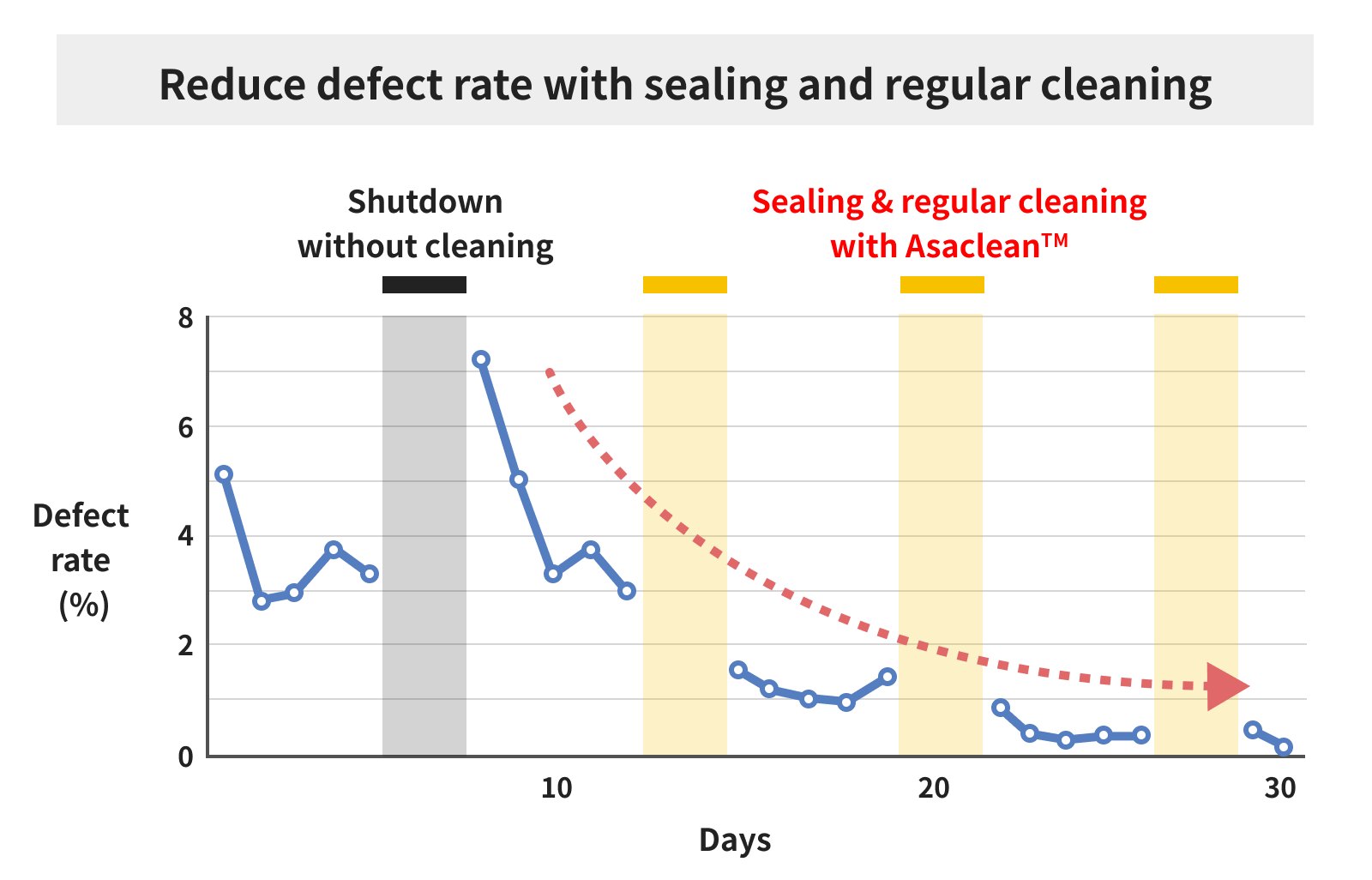
Reported trial structure
- Material: Xyron / modified PPE (m-PPE)
- Regular Cleaning: Every 2 weeks with ASACLEAN newEX and newUP
- Sealing: newUP across holidays
- Metric: Post-restart contamination defects
- Reported result: Post-holiday defects 3% to 0.3%, i.e. 90% relative reduction in this case
Regular Cleaning + Sealing
3% → 0.3%Xyron and m-PPE cleaned every 2 weeks with newEX and newUP, holiday sealing with newUP
Regular Cleaning
10% → <1%ABS and black to PP and black changeover with scheduled UP-grade cleaning
Why sealing cuts post-startup trouble
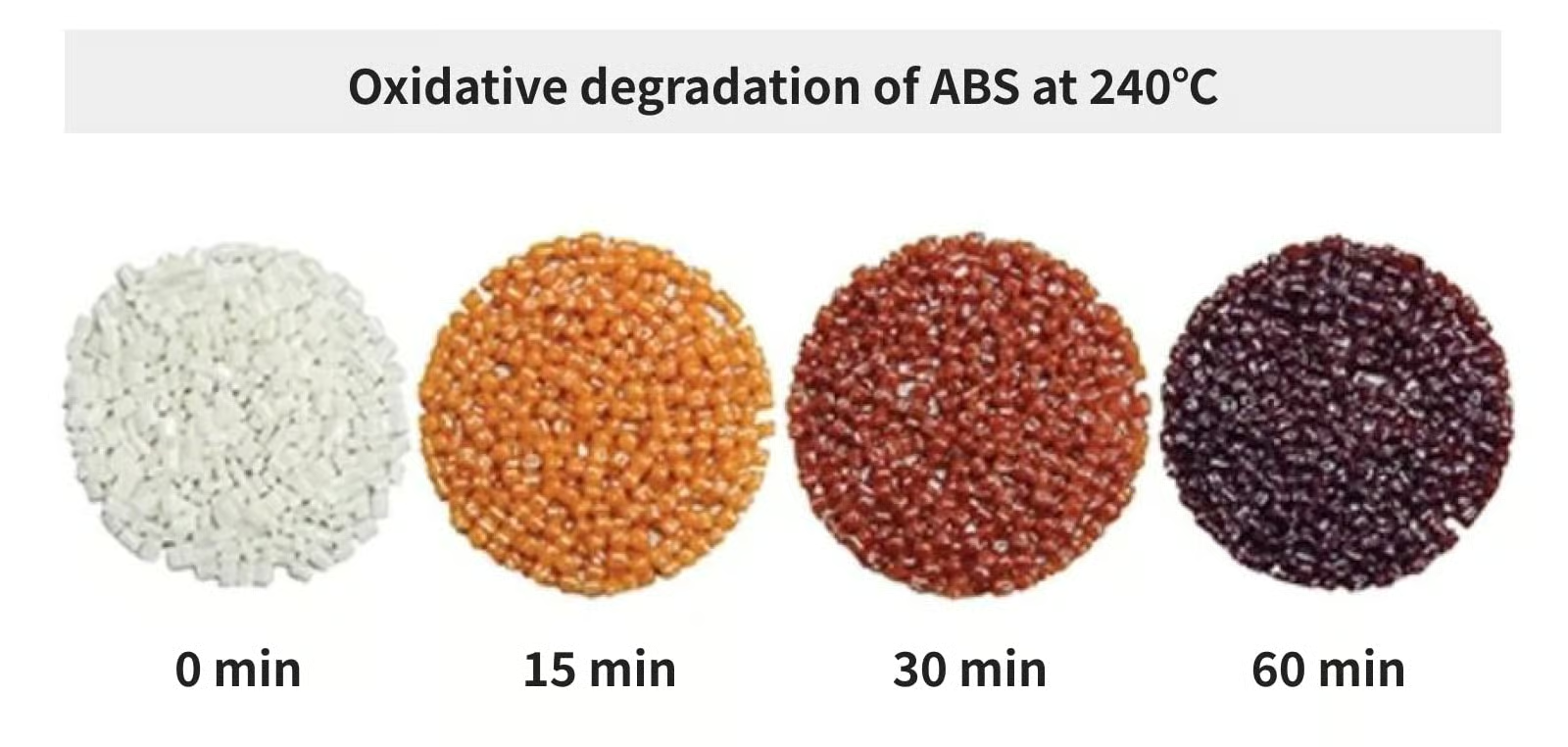
Asahi Kasei explains held resin still meets residual heat and oxygen after stops, enabling thermal degradation and oxidation. Holding ASACLEAN in the machine cuts oxygen contact and residual-heat degradation. Startup purging then carries possibly degraded material out before part production.
5Designing cleaning cycles from real data
Tables below are Trial starting points Not fixed standards. Tune to resin type, defect history, stop duration and the picked ASACLEAN grade terms.
| Production pattern | Routine Purging start | Consider sealing when |
|---|---|---|
| Running 24/7 Single color | Start from PM cycles or before defect-graph uptrends, then tune to data | Before risky resin-degrading PM or shutdown stops |
| Frequent color and material change | Tie to high-contamination changeovers, split data by resin and color pair | Before holidays or long stops after procedural cleaning |
| Running 1–2 shifts | Trial pre-shift-end or weekly, comparing startup scrap | When data confirms overnight holds oxidize or contaminate |
6Amount and step principles
Routine Purging (short steps)
- Run the barrel near empty of resin
- Feed ASACLEAN per grade-manual or technician starting amounts
- Set temperature and Back Pressure per grade terms until discharge passes gates
- Feed new resin to rinse out
Sealing (in-machine hold)
- Confirm the picked grade fits machine resin, temperature and flow path
- Clean and fill ASACLEAN across zones per grade steps before shutdown
- Stop the machine and set screw position per grade and machine manual
- At restart set temperature and purge material out per steps before approving first parts
7Measurement: KPIs to track
- Contamination / Black Specks Defect Rate Compare equal-window baselines before and after
- Startup Scrap (kg or counts). Split normal days vs first day after shutdown
- Time to First Good Part Time from machine start to QA part approval
- Purging Material Used Track per-round amounts for total cost, not defects alone
- Average Time Between Manual Cleanings Check whether strip-down intervals stretch
- OEE Improvement See OEE and ROI article
Want a Routine Purging Plan table for your plant?
CSC technicians design PM programs by machine count, resin type and production shifts
85 common mistakes
-
Using only at color or material changes
Most plants reach for compound only on trouble. Yet Routine Purging belongs in preventive plans even with no color or resin change.
-
Over-cutting amounts to save cost
Too little compound purges incompletely. Leftover residue keeps building until real scrap and downtime costs dwarf hoped savings.
-
Wrong grade for the job
Each grade targets different purposes. Wrong picks cut purge effectiveness and may damage equipment long-term.
Examples:
- Glass-fiber grades through Hot Runner risk gate and fine-path wear
- Glass-fiber grades sealing (screw-soaking) long risk cumulative friction harming screw and barrel surfaces
-
Skipping post-purge rinse
Unrinsed compound may contaminate first-lot parts into scrap or failed standards
-
No data or result tracking (KPI)
Without logged color-change times, scrap amounts or falling speck rates, no data supports value assessment or directional purging-program improvement
9FAQ
Small plant, few machines. Is Routine worth it?
Judge from plant scrap costs, color-change times, problem frequency and per-round purge costs. Trial Calculate ROI ROI with real figures before fixing permanent cycles
Need dedicated staff?
Trained operators with machine SOPs can run Routine Purging. CSC technicians can review grades, steps and acceptance checkpoints before real use.
One grade for every machine?
Sometimes, such as whole plant on similar-temp PP and PE. With engineering-plastics machines (Nylon, PC, PEEK) split grades. Ask technicians to optimize.
Can Routine Purging and Sealing share a grade?
Some grades serve both, but verify that grade manual. With Hot Runner consider maker-listed grades such as RU / RE / SL / PF Per real resin and temperature
Can the 3%-to-0.3% result target my plant?
Use it as strategy-potential evidence, never as a guarantee. That case ran Xyron and m-PPE, newEX and newUP and specific cleaning cycles. Set targets from real-machine baselines and controlled trials.